
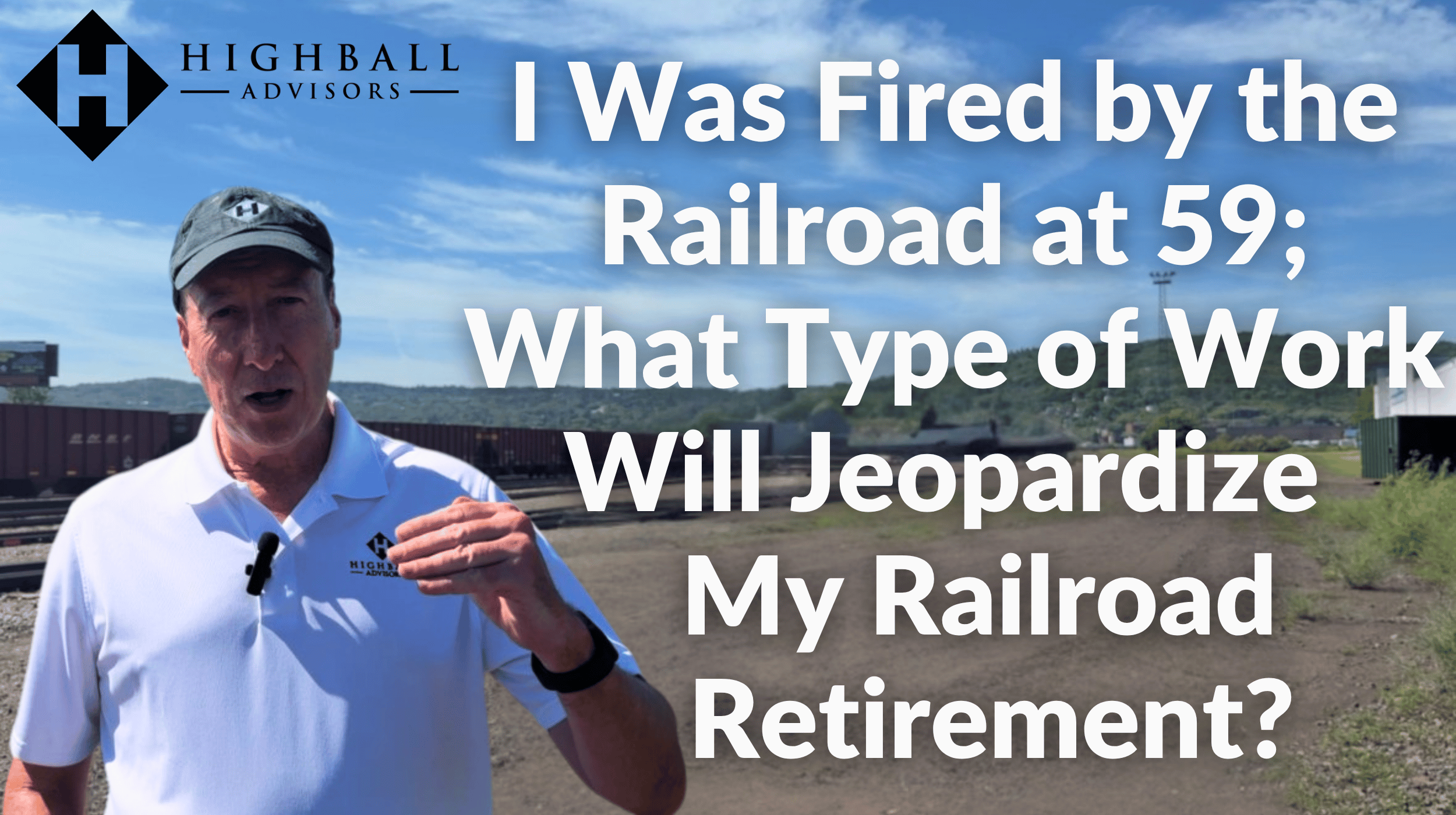
I Was Fired by the Railroad at 59; What Type of Work will Jeopardize my Railroad Retirement?
Tier 1 Tier 2 Video Annuity Survivor BenefitsIf You're Terminated Before Railroad Retirement, Should You Take Another Job?
Losing a railroad job late in your career can be stressful, especially when you're approaching retirement. One of the biggest questions many railroad employees have is whether taking another job could affect their Railroad Retirement benefits.
Here's a common question:
"I have more than 23 years of railroad service, I'm 59 years old, and Union Pacific is terminating my employment. What type of employment would affect my Railroad Retirement?"
First, being terminated near retirement is a difficult situation, and many employees understandably worry about how it will impact the benefits they've worked years to earn.
Are You Still Eligible for Railroad Retirement?
With more than 23 years of railroad service, you are generally vested in the Railroad Retirement system. That means you have earned the right to receive Railroad Retirement benefits when you become eligible.
If you choose to begin receiving benefits as early as age 62, keep in mind that your annuity may be permanently reduced because of early retirement. Depending on your circumstances, this reduction can be significant, so it's important to understand how claiming early affects your lifetime benefits.
Could a New Job Affect Your Railroad Retirement?
Taking a job outside the railroad industry generally does not eliminate the Railroad Retirement benefits you've already earned. However, it can affect something known as your current connection to the railroad industry.
Maintaining a current connection may be important because it can affect eligibility for certain Railroad Retirement benefits, particularly survivor benefits for your spouse or other eligible family members.
If you permanently leave the railroad industry and establish long-term employment elsewhere, you could unintentionally sever your current connection, depending on your individual circumstances.
Should You Look for Another Railroad Job?
If possible, obtaining another position with a railroad employer may help preserve your current connection while allowing you to continue earning railroad service.
Of course, every situation is different. For many families, replacing lost income is the immediate priority, and accepting employment outside the railroad industry may be the practical choice. Understanding how that decision could affect your retirement benefits is an important part of the planning process.
Key Takeaway
If you're terminated before retirement:
- Your previously earned Railroad Retirement benefits are generally protected if you're vested.
- Beginning benefits early may result in a permanent reduction in your monthly annuity.
- Accepting non-railroad employment could affect your current connection, which may impact certain benefits, including survivor benefits for your spouse.
- If possible, continuing employment with another railroad employer may help preserve your current connection.
Because current connection rules can be complex and have long-term consequences, it's worth reviewing your options carefully before accepting new employment. A little planning today can help protect both your retirement benefits and your family's financial security in the future.
Get Free Railroad Retirement Assessment
Disclaimer: This article is provided for general information and illustration purposes only. Nothing contained in the material constitutes tax advice, a recommendation for purchase or sale of any security, or investment advisory services. Highball Advisors encourages you to consult a financial planner, accountant, and/or legal counsel for advice specific to your situation. Reproduction of this material is prohibited without written permission from Highball Advisors, and all rights are reserved from Highball Advisors, and all rights are reserved.