
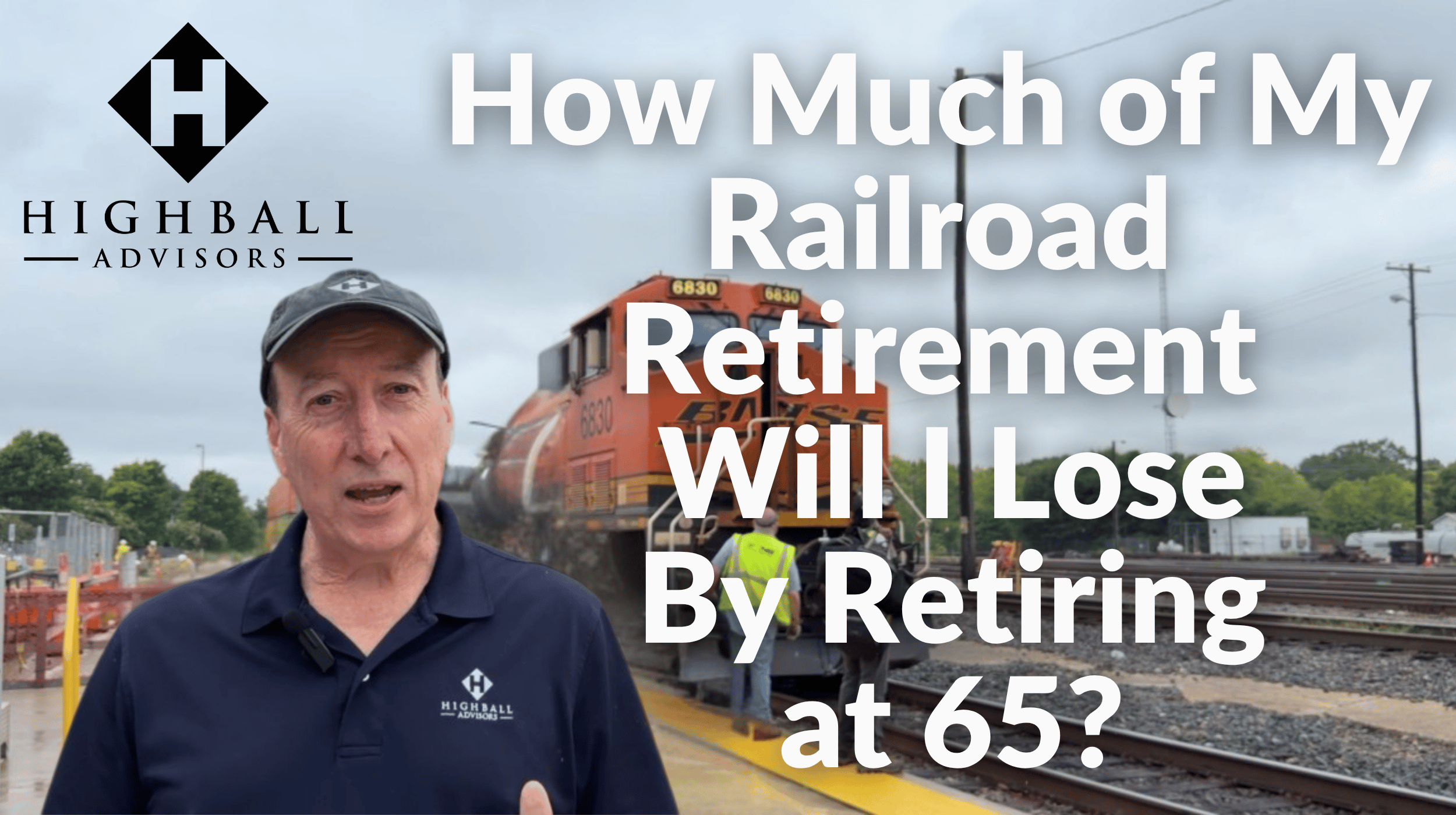
How Much of My Railroad Retirement Will I Lose By Retiring at 65?
Tier 1 Tier 2 Video Retirement Financial PlanningRailroad Retirement at Age 65 with 27 Years of Service: How Much Will Your Benefit Be Reduced?
One of the most common questions railroad employees ask is how retiring before reaching 30 years of railroad service affects their Railroad Retirement annuity.
A recent question from a reader highlights this concern:
Question: "How much of a reduction will I have retiring at age 65 with 27 years of service? I was 38 years old when I hired on."
The answer depends on one important factor: whether you've reached 30 years of railroad service.
Understanding Age Reductions for Railroad Retirement
Under the Railroad Retirement system, employees who accumulate 30 or more years of creditable railroad service can generally begin receiving a full annuity as early as age 60, without an age-based reduction.
However, if you retire with fewer than 30 years of service, your annuity may be permanently reduced if you begin collecting benefits before your full retirement age.
What Happens at Age 65?
For railroad employees with less than 30 years of service, the maximum age reduction begins at age 62, when the reduction can be as much as 30%.
By age 65, that reduction is significantly smaller. In the example above, retiring at age 65 with 27 years of service would result in an approximately 13.3% permanent reduction to the annuity.
Is It Worth Waiting Longer?
Some railroaders wonder whether delaying retirement beyond age 65 will substantially increase their benefit.
In many cases, the answer is not necessarily.
If you've already reached your full retirement age, delaying retirement several more years may provide only limited additional value, especially if you are not going to reach the 30-year service milestone. Every situation is different, however, so it's important to evaluate the potential increase in benefits against the income you would receive by retiring sooner.
Key Takeaways
- Railroad employees with 30 or more years of service can generally retire at age 60 without an age reduction.
- Employees with fewer than 30 years of service may receive a permanently reduced annuity if they retire before full retirement age.
- Retiring at age 65 with 27 years of service results in an approximately 13.3% age reduction to the annuity.
- Before deciding when to retire, consider both your years of service and your full retirement age to understand how each affects your benefit.
Understanding how age reductions work can help you make a more informed retirement decision and avoid unexpected reductions in your monthly Railroad Retirement benefit.
Get Free Railroad Retirement Assessment
Disclaimer: This article is provided for general information and illustration purposes only. Nothing contained in the material constitutes tax advice, a recommendation for purchase or sale of any security, or investment advisory services. Highball Advisors encourages you to consult a financial planner, accountant, and/or legal counsel for advice specific to your situation. Reproduction of this material is prohibited without written permission from Highball Advisors, and all rights are reserved from Highball Advisors, and all rights are reserved.