
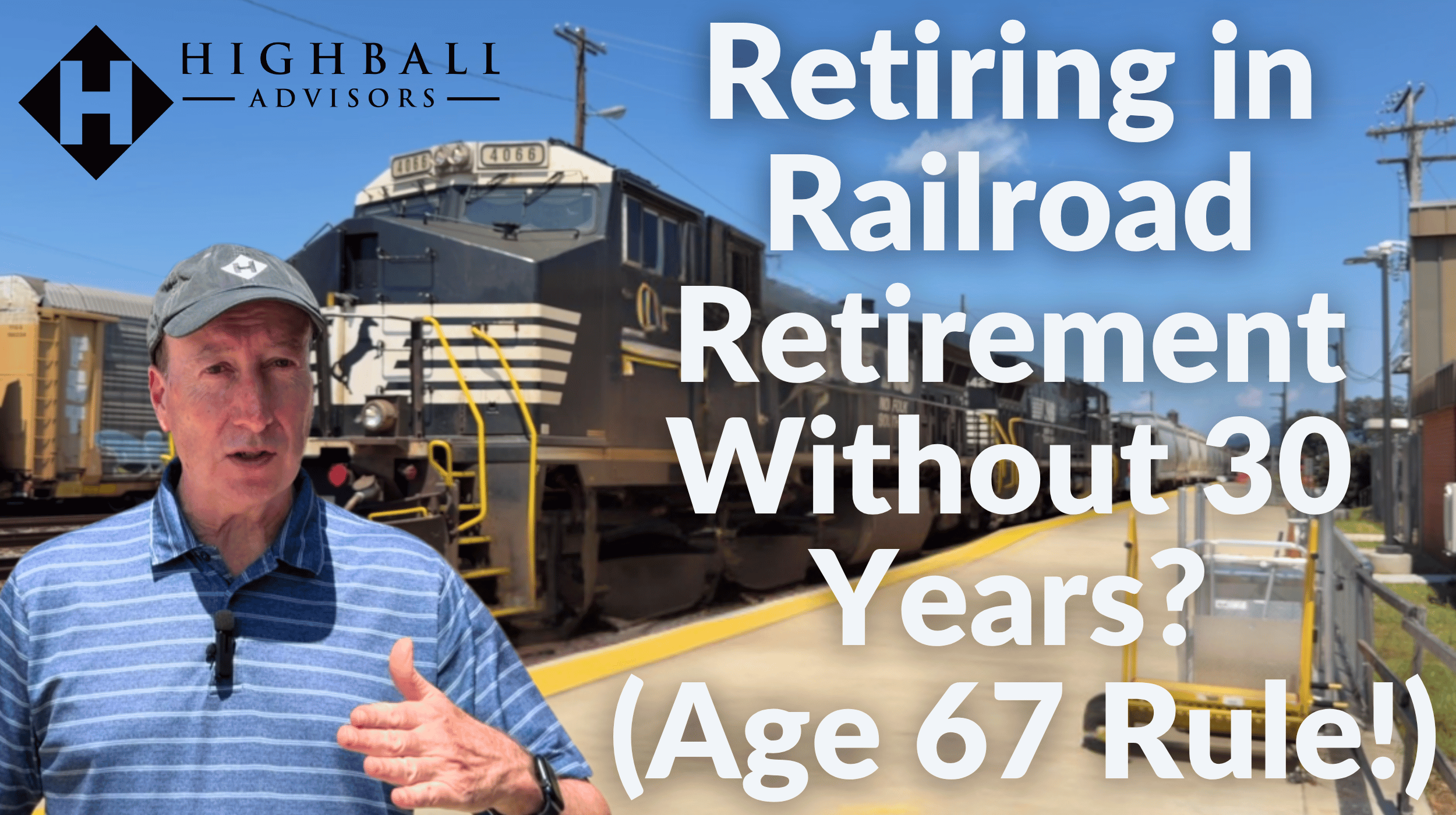
Retiring in Railroad Retirement without 30 Years (Age 67 Rules)
Tier 1 Tier 2 Video Spouse Annuity RetirementCan You Receive Full Railroad Retirement Benefits Without 30 Years of Service?
One of the most common questions railroad employees have about retirement is whether they need 30 years of railroad service to receive their full Railroad Retirement benefits.
Recently, a railroad employee asked:
“I hired out at age 39 and plan to retire at 67. Am I eligible for full Railroad Retirement benefits, or will my benefits be reduced because I didn’t work the full 30 years?”
The short answer is: If you retire at age 67, you can receive your Railroad Retirement benefits without an age reduction, even if you have fewer than 30 years of railroad service.
Age 67 Is Full Retirement Age
Under the Railroad Retirement system, age 67 is the full retirement age for many employees who do not qualify for the special 30-year provision.
That means an employee who hires out at 39 and works until age 67 would have approximately 28 years of railroad service. Even though that employee does not reach the 30-year milestone, retiring at age 67 avoids an age-related reduction in the retirement annuity.
In other words, you do not have to reach 30 years of service to receive an unreduced benefit if you wait until your full retirement age.
Why 30 Years of Service Matters
So, if you can receive unreduced benefits at 67 without 30 years, why is reaching 30 years of service so important?
The major advantage is that 30 years of service allows you to qualify for an earlier full retirement age under Railroad Retirement rules.
For example, an employee with 30 years of qualified railroad service can generally begin an unreduced Railroad Retirement annuity as early as age 60.
That creates a significant difference:
- 30 years of service: You may be able to retire at age 60 with no age reduction.
- Fewer than 30 years of service: You generally need to wait until your applicable full retirement age to avoid an age reduction.
- Age 67: For an employee who does not qualify for the 30-year provision, this is generally the point at which the age reduction is no longer an issue.
Therefore, the value of reaching 30 years isn't simply that you receive a “better” benefit at age 67. The bigger advantage is having the option to retire earlier without an age reduction.
What About Spousal Benefits?
The 30-year rule can also affect the timing of certain spouse benefits.
A spouse of a railroad employee with 30 years of service may qualify for an unreduced Railroad Retirement spouse annuity at age 60, subject to the applicable eligibility requirements.
That can be another important benefit of reaching the 30-year milestone.
Your Tier 2 Benefit Keeps Growing
There is another consideration for employees who continue working beyond 30 years: Tier 2 benefits continue to grow with additional railroad service and earnings.
Tier 2 is an important component of Railroad Retirement because it is designed to provide a pension-like benefit based in part on railroad service and earnings.
So, while reaching 30 years can open the door to earlier unreduced retirement, continuing to work can also increase the eventual Tier 2 benefit.
The Bottom Line
If you hired out at age 39 and work until age 67, you may have fewer than 30 years of railroad service. That does not automatically mean your Railroad Retirement annuity will be reduced.
The key distinction is between years of service and your retirement age.
Thirty years of service can provide the valuable option of retiring as early as age 60 with an unreduced annuity. But if you have fewer than 30 years, waiting until your full retirement age can allow you to receive your benefit without an age reduction.
And remember: your exact Railroad Retirement eligibility and benefit amount depend on your individual service record, earnings history, and other factors.
For more information, railroad employees should review their individual circumstances and consider obtaining an official Railroad Retirement Board benefit estimate before making retirement decisions.
Get Free Railroad Retirement Assessment
Disclaimer: This article is provided for general information and illustration purposes only. Nothing contained in the material constitutes tax advice, a recommendation for purchase or sale of any security, or investment advisory services. Highball Advisors encourages you to consult a financial planner, accountant, and/or legal counsel for advice specific to your situation. Reproduction of this material is prohibited without written permission from Highball Advisors, and all rights are reserved from Highball Advisors, and all rights are reserved.