
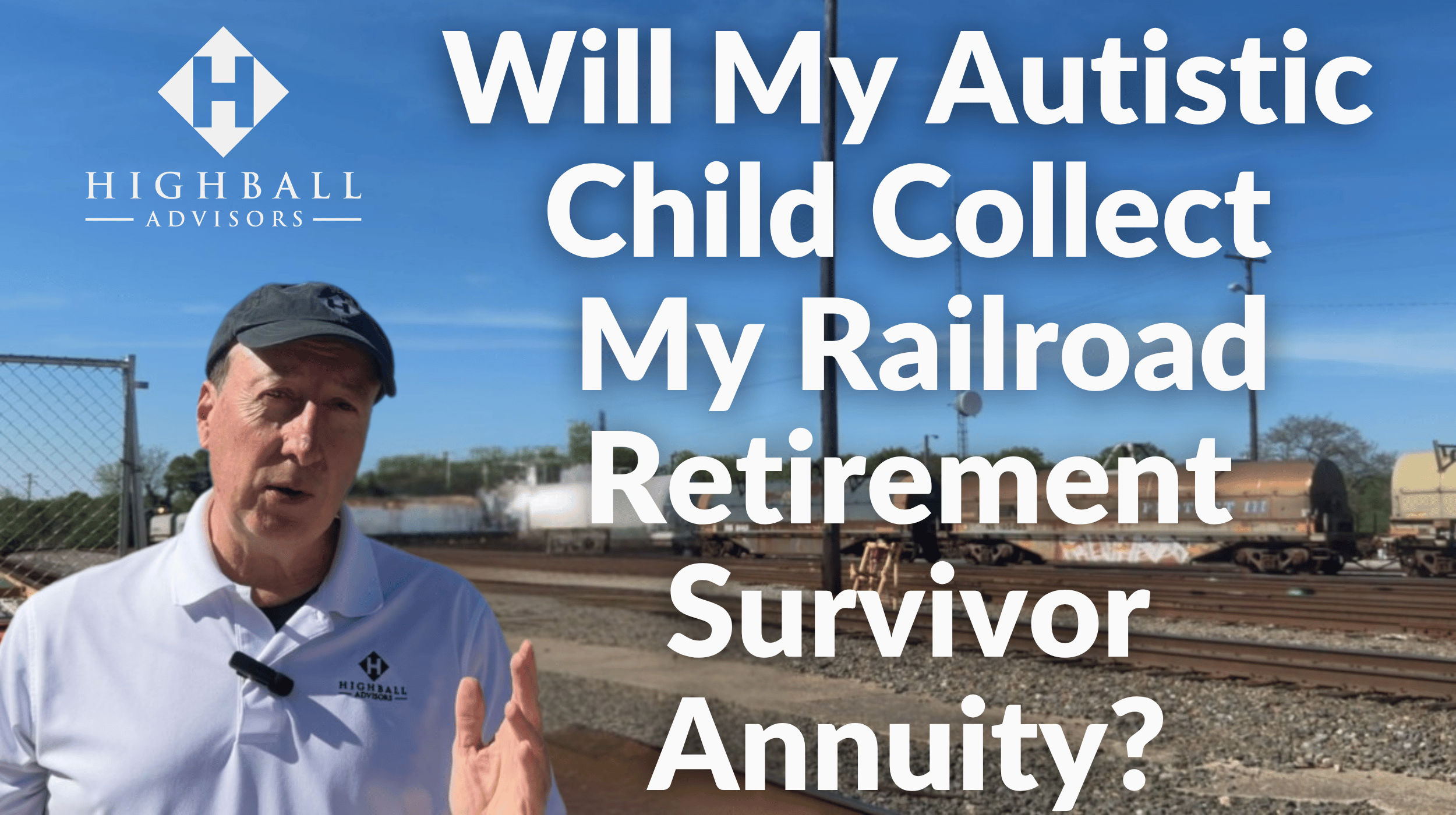
Will My Autistic Child Collect My Railroad Retirement Survivor Annuity?
Video Survivor Benefits Retirement Financial Planning Estate PlanningRailroad Retirement Mailbag: Can a Child With Autism Receive Survivor Benefits?
Welcome back to another edition of the Highball Advisors Railroad Retirement Mailbag, where we break down real questions from railroad families planning for the future.
Today’s Question
Ben B. asks:
“Can my child, who is autistic, collect any of my Railroad Retirement benefits when I pass away?”
Short Answer: Yes; If Certain Conditions Are Met
In many cases, the answer is yes. A child with a qualifying disability, including autism, may be eligible to receive a Railroad Retirement survivor annuity. However, there are a few important requirements to understand.
Key Eligibility Criteria
For a child to qualify for survivor benefits under Railroad Retirement:
- Dependency matters
The child must be considered a dependent of the railroad worker at the time of their passing. - Disability must be established early
The disability must be formally documented with the Railroad Retirement Board before the child reaches age 22. - Beyond the typical age limit
While most children age out of eligibility at 18, a qualifying disability allows benefits to continue into adulthood.
Why Early Notification Is Critical
One of the most important steps is notifying the Railroad Retirement Board about your child’s condition as early as possible.
Doing so ensures:
- Proper documentation is in place
- There are no gaps in eligibility as your child transitions into adulthood
- Your family’s long-term financial plan is protected
Without this step, even an otherwise eligible child could face delays—or worse, lose access to benefits.
Planning Ahead for Peace of Mind
For families with special needs dependents, survivor benefits can play a crucial role in long-term financial security. Making sure everything is properly documented well before age 22 is an essential part of estate planning.
Final Thoughts
Railroad Retirement survivor benefits can provide meaningful support for children with disabilities—but the rules are specific, and timing matters.
If you have a similar question or want to learn more about eligibility requirements and common pitfalls, consider exploring additional resources or speaking with a Railroad Retirement specialist.
Have a question you’d like featured in a future Mailbag? Send it in.
Until next time, stay safe, stay on track, and take care.
Get Free Railroad Retirement Assessment
Disclaimer: This article is provided for general information and illustration purposes only. Nothing contained in the material constitutes tax advice, a recommendation for purchase or sale of any security, or investment advisory services. Highball Advisors encourages you to consult a financial planner, accountant, and/or legal counsel for advice specific to your situation. Reproduction of this material is prohibited without written permission from Highball Advisors, and all rights are reserved from Highball Advisors, and all rights are reserved.