
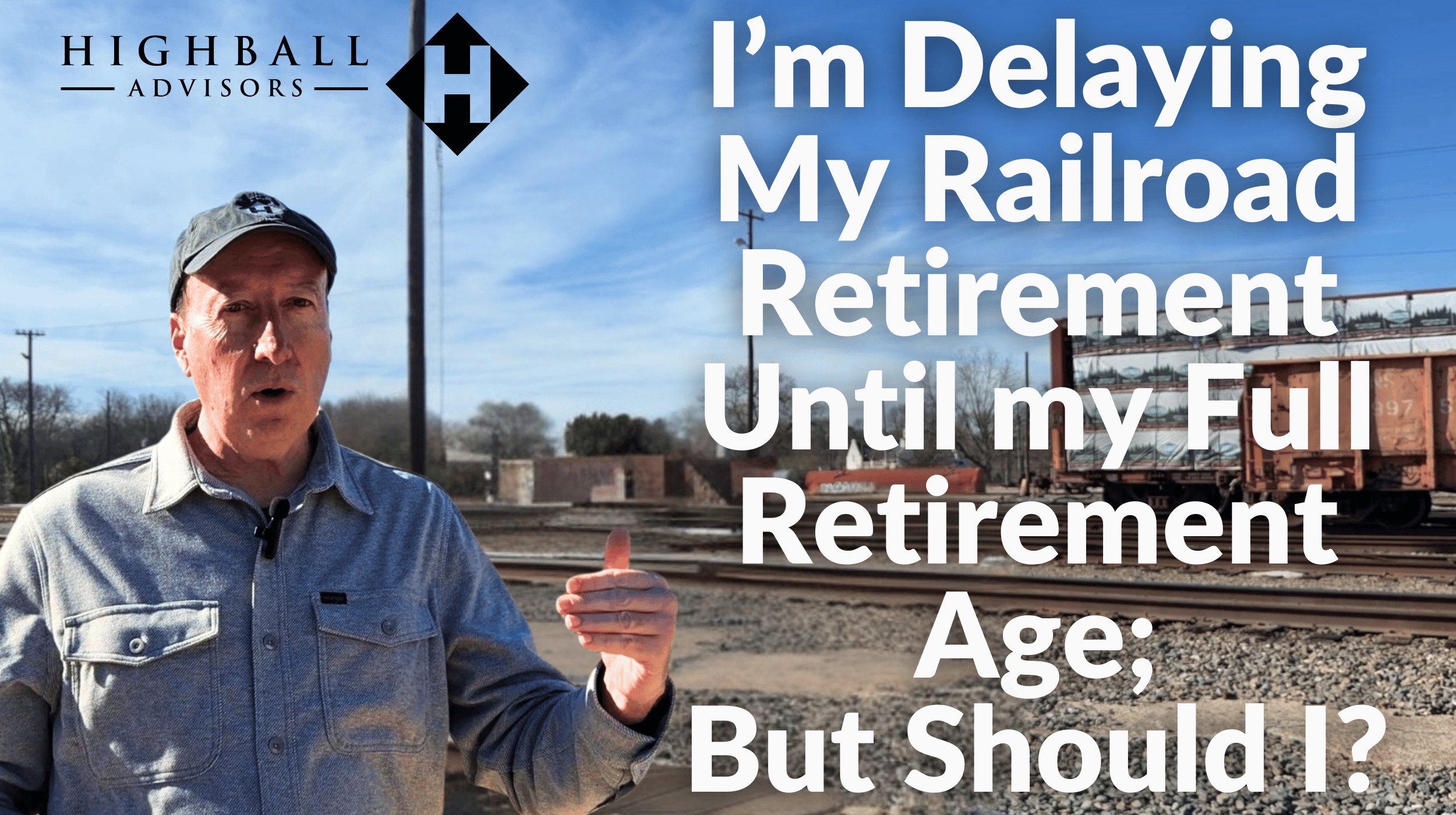
I'm Delaying My Railroad Retirement Until my Full Retirement Age; But Should I?
Tier 1 Tier 2 Video Spouse Annuity Retirement Financial PlanningRailroad Retirement Mailbag: Coordinating Spousal and Social Security Benefits
In this edition of the Highball Advisors Railroad Retirement Mailbag, we tackle a thoughtful question about coordinating railroad retirement and Social Security benefits.
Question: “I’m retired at 61 with 20 years of railroad service and living off my 401(k) until I reach 67 and qualify for full retirement. My wife is three years younger. Can she claim a spousal benefit when I do, and then later—at 67 or 70—switch to her own Social Security benefit if it’s higher?”
This is a great question and a situation many railroad families face.
Can This Strategy Work?
Yes—technically, the strategy you described can work. A spouse may be able to collect a spousal benefit first and later switch to her own Social Security benefit if it is larger.
However, the key word here is technically. Whether it’s the best strategy depends on several important details.
One Important Tradeoff: Delaying Railroad Retirement
By delaying the start of your railroad retirement benefits:
- Tier II benefits are frozen
- Tier II does not continue to grow while you wait
This is often overlooked. While delaying Social Security can increase benefits, delaying railroad retirement does not always work the same way—especially for Tier II.
That means waiting until age 67 could result in lost income on the back end that may outweigh the benefit of delaying.
Planning Options for the Spouse
Because your wife is younger, she may have multiple claiming paths to consider, such as:
- Claiming her own Social Security benefit as early as 62
- Claiming a spousal railroad retirement benefit later
- Delaying her own Social Security benefit until full retirement age—or even age 70—if it continues to grow and becomes the larger benefit
The optimal strategy depends on:
- The size of each benefit
- Your railroad retirement start date
- How long benefits are expected to be paid
- Household cash flow needs
Why Scenario Planning Matters
This is not a one-size-fits-all decision. When you delay one benefit, you may be gaining on one side while losing on another—particularly with spousal benefits and Tier II railroad retirement.
That’s why it’s critical to run multiple scenarios and look at the lifetime impact of each option, not just the monthly benefit at one age.
Learn More
For a deeper dive, watch the video “What You Need to Know About Spousal Benefits for Railroad Retirement.” It walks through these coordination issues and common planning mistakes in detail.
If you have a question you’d like covered in a future Railroad Retirement Mailbag, feel free to send it in.
Until next time—stay on track and take care.
Get Free Railroad Retirement Assessment
Disclaimer: This article is provided for general information and illustration purposes only. Nothing contained in the material constitutes tax advice, a recommendation for purchase or sale of any security, or investment advisory services. Highball Advisors encourages you to consult a financial planner, accountant, and/or legal counsel for advice specific to your situation. Reproduction of this material is prohibited without written permission from Highball Advisors, and all rights are reserved from Highball Advisors, and all rights are reserved.